
Window Replacement in Massachusetts: Signs, Window Types and Installation
· By Ismar A. Da Silva
In a Massachusetts winter, you can feel a bad window before you see it. There is a cold draft at the couch, frost on the inside of the glass, or a sash that will not stay up. Windows are one of the main places a house loses heat, and they also affect noise, light and how the outside of the home looks.
This guide covers what we look at when homeowners in Stoughton, Easton and nearby towns ask about window replacement: the signs it is time, the common window types, what a proper installation involves, the extra care older homes need, and how efficiency programs fit in.
Signs it is time to replace your windows
Some signs are obvious: fogging or condensation between the panes of double-pane glass (a failed seal), cracked glass, rotted sills or frames that are soft when you press them, and sashes that stick, will not lock or will not stay open. Drafts you can feel with your hand on a windy day are another clear sign.
Others are easier to miss. Paint that keeps peeling around the same window, water stains on the drywall below, or ice building up on the inside of the glass in January often point to air or water leaking around the frame. Sometimes the fix is repair or new weatherstripping, and sometimes the window has reached the end of its life. A walkthrough helps sort out which is which.
Double-hung, casement and other common types
Double-hung windows are the classic choice on Colonials and Capes across New England. Both sashes slide up and down, and many tilt in for cleaning from inside, which is handy on a second floor. They keep the traditional look many Massachusetts homes are built around.
Casement windows are hinged on the side and crank open. When closed, the sash presses against the weatherstripping, so they tend to seal tightly, and they work well over a kitchen sink where reaching up to lift a sash is awkward. Sliders, awning windows over a tub or in a basement, and fixed picture windows round out the most common options. Many homes end up with a mix, matched to each room.
Insert replacement vs full-frame replacement
An insert (pocket) replacement fits a new window inside the existing frame. It is faster and disturbs less interior trim and exterior siding, which makes it a good option when the existing frame is square, dry and solid.
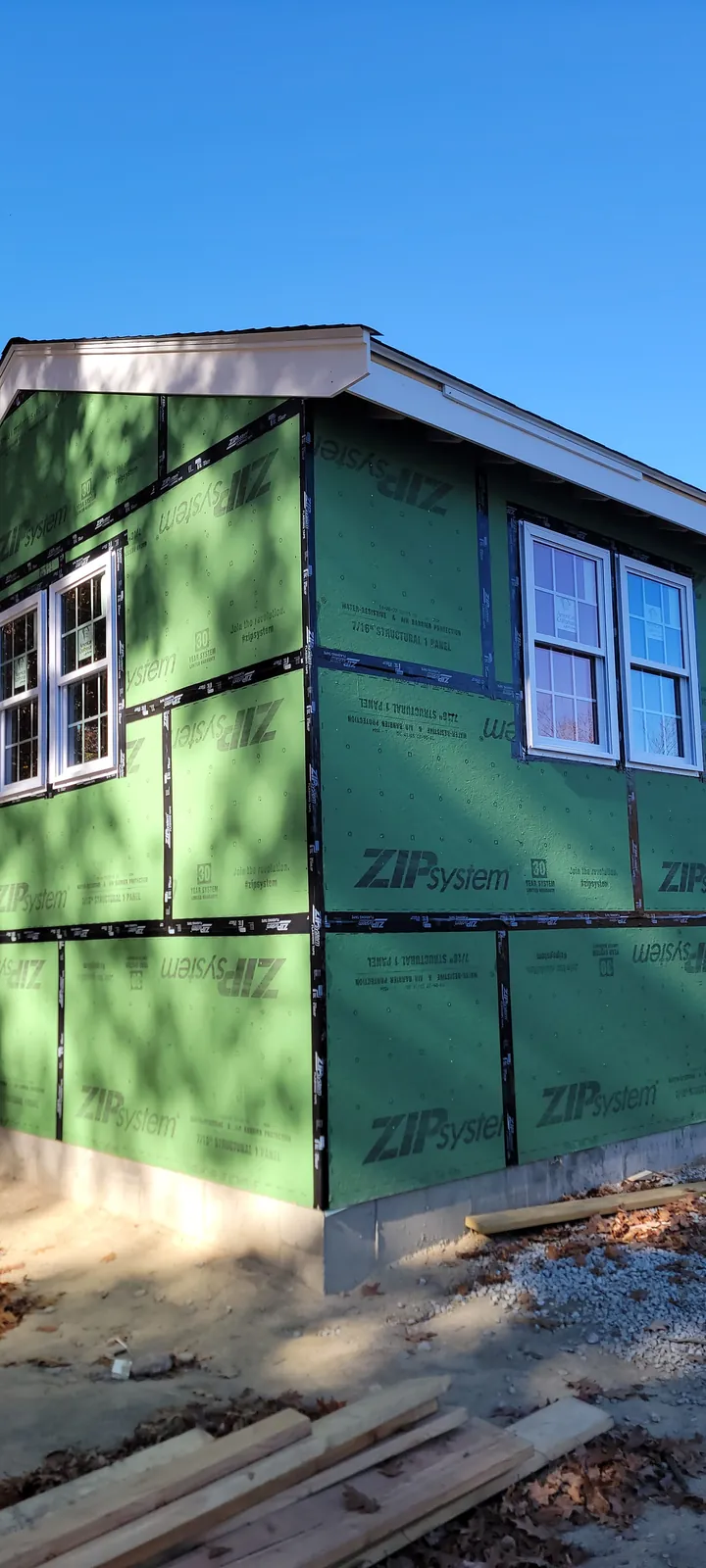
A full-frame replacement removes the old window down to the rough opening. It costs more and takes longer, but it lets the installer inspect and repair rot, add insulation around the frame and flash the opening properly. If you see water damage or the frames are soft, full-frame is usually the right call. On additions and new construction, windows go into a fully wrapped wall, like the ZIP System sheathing in the photo above, with taped seams and flashed openings.
What a good installation looks like
A window is only as good as its install. The rough opening should be checked for rot and level, the sill should be flashed with a sloped or pan flashing so any water that gets in drains out, and flashing tape should be lapped in the right order (bottom first, then sides, then top) so water sheds like shingles.
The gap between the window and the framing gets low-expansion foam or backer rod and sealant, not stuffed fiberglass that lets air through. The window has to be set level, plumb and square so it opens smoothly and locks properly. On the outside, trim and caulk finish the job. Skipping these steps is how a brand-new window ends up leaking within a few winters.
Older homes and lead paint
Many homes in our area have original or decades-old windows, from older Colonials to plenty of 1950s and 60s ranches and split-levels. Older openings are often out of square, and removing old windows can reveal rotted sills, missing insulation or old weight pockets that need to be filled.
If your house was built before 1978, it may contain lead-based paint, and windows are one of the most common places it shows up because the sashes rub as they open. Work that disturbs painted surfaces in pre-1978 homes is subject to lead-safe work practice rules. Ask any contractor how they handle lead-safe practices, containment and cleanup before the old windows come out.
Energy efficiency and Mass Save
Modern windows typically use double or triple pane insulated glass with low-E coatings and gas fills, and the labels show ratings such as U-factor. In a cold climate like ours, a lower U-factor means better insulation. Look for windows rated for northern climates.
Massachusetts utilities offer energy efficiency programs through Mass Save that may include incentives for certain upgrades, and some programs focus on insulation and air sealing first. Programs and eligibility change, so check the Mass Save website directly for what is currently offered before you plan around it.
Permits, timing and planning
Replacing windows in the same opening often still requires a permit in Massachusetts, and changing the size of an opening or adding a new window almost always does, since it affects framing. Your town's building department can tell you what it needs, and a registered contractor handles the application.
Windows can be replaced year-round. In winter, a good crew opens one window at a time and closes it up before the end of the workday so the house does not lose much heat. Lead times for custom sizes can run several weeks, so measuring early helps. If you want a second opinion on whether your windows need repair or replacement, we can come out and give you a free estimate.
Frequently asked questions
- How do I know if my windows need replacing or just repair?
- Fogging between panes, rotted frames, cracked glass and sashes that will not operate usually point to replacement. Drafts from worn weatherstripping or a loose sash can sometimes be repaired. An in-person look at the frame and sill is the best way to tell.
- Are double-hung or casement windows better for Massachusetts?
- Both work well. Double-hung windows fit the traditional look of most New England homes and tilt in for cleaning. Casement windows tend to seal very tightly and are easier to open over a sink or counter.
- Do I need a permit to replace windows in Massachusetts?
- Often, yes. Requirements vary by town, and changing the size of an opening almost always requires a permit. Check with your town's building department or ask your contractor to handle it.
- Can windows be replaced in the winter?
- Yes. Installers typically work one opening at a time and seal it before moving to the next, so heat loss is limited. Cold weather does affect some sealants, so the crew picks products rated for low temperatures.
- What should I know about lead paint and old windows?
- Homes built before 1978 may have lead-based paint, often on window sashes and trim. Work that disturbs those surfaces should follow lead-safe practices, so ask your contractor how they handle containment and cleanup.
Related services
Serving
Ready for an exact price?
Get a free, no-pressure in-home estimate. Real numbers for your home, not a phone guess.