
Stoughton, MA Home Remodeling Guide: What to Tackle First and How to Plan It
· By Ismar A. Da Silva
Most Stoughton homeowners do not have one project in mind. They have a list: the bathroom that has not changed in decades, a kitchen that feels cramped, a basement that is mostly storage, and an exterior that needs paint. The hard part is not wanting the work done. It is figuring out what to do first so you do not end up redoing anything later.
This guide walks through how we think about sequencing a remodel in a Stoughton home, what older and mid-century houses in town often reveal once walls open, how permits work through the town, and how to plan around a Massachusetts winter. It is written for homeowners who want a clear plan before they call anyone.
Start with the house you have, not the photo you saved
Stoughton has a wide range of housing. Near Stoughton Center and the streets around the commuter rail station you find older Colonials, Capes and two-families. In North Stoughton, West Stoughton and South Stoughton there are many 1950s and 60s ranches and split-levels, along with newer Colonials. The style of house shapes almost every remodeling decision.
An older Colonial may have plaster walls, floors that dip toward the center of the house, and plumbing that has been patched by several owners. A split-level usually has more predictable framing but a lower level that sits partly below grade. Knowing which of these you are dealing with helps you set a realistic budget and timeline before you fall in love with a specific design.
A sensible order for a multi-project remodel
If you plan to do several rooms over a few years, the order matters. A good rule is to work from the things that protect the house toward the things that finish it. Water problems, roof or gutter issues, and failing windows come before interior finishes, because a leak can ruin a new floor or ceiling in a single storm.
After that, think about where the mess flows. Basement work often involves running new wiring, ducts or plumbing that may need to reach the floors above. Kitchens and bathrooms involve the most plumbing and electrical. Painting and flooring in living areas usually come last, since dust, ladders and material deliveries from other projects can damage fresh finishes.
For many Stoughton families the order ends up looking like this: address any basement moisture, remodel the bathroom or kitchen that is causing the most daily frustration, finish the basement, then repaint and refresh the main living spaces. Your house may call for a different order, but the principle of protecting first and finishing last holds up well.
Basements in Stoughton: moisture comes first
Lower levels in ranches and split-levels around town are some of the most valuable square footage you can add without building out. But a New England basement has to be dry before it can be comfortable. We look for water stains on the foundation, efflorescence (that white chalky residue), musty smells, and how the yard is graded around the house.
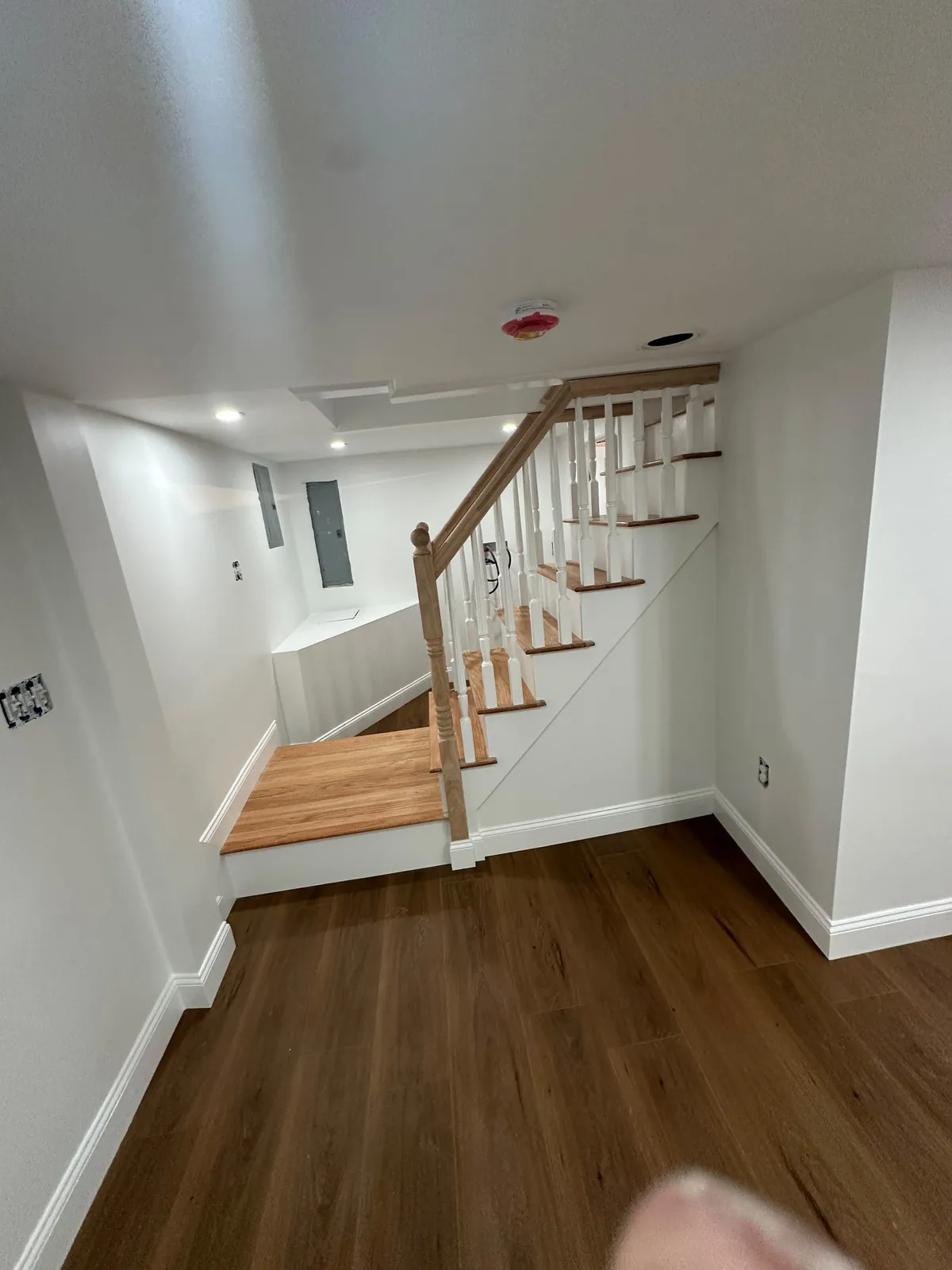
Often the fix starts outside: extending downspouts, regrading soil away from the foundation, or cleaning gutters that overflow. Inside, the plan typically includes insulation suited to below-grade walls, a floor that tolerates some humidity such as luxury vinyl plank, and attention to the stairs, which are often the first thing guests see. If you want a bedroom down there, egress requirements come into play and should be discussed with the Stoughton Building Department early.
Kitchens and bathrooms in older Stoughton homes
In the older homes near the center, kitchens and bathrooms are where surprises live. Opening a wall can reveal old galvanized pipes, undersized wiring, or framing that was cut to fit a drain decades ago. A good estimate builds in a realistic allowance for those conditions rather than assuming everything behind the plaster is perfect.
Bathrooms in these houses are often small, so layout choices matter. A walk-in shower with a recessed niche and a glass door can make the room feel larger than a tub with a curtain. The shower itself should be built properly from the subfloor up: correct drain rough-in, cement backer board and a liquid waterproofing membrane before any tile goes on. That hidden work is what keeps a shower from leaking into the ceiling below.
Kitchens benefit from the same approach. Leveling the floor and checking walls for plumb before cabinets go in is what makes the finished countertop sit flat and the backsplash tile lines look straight.
Permits through the Stoughton Building Department
Most remodeling work beyond paint and simple cosmetic updates typically needs a permit. That includes structural changes, new or relocated plumbing and electrical, and basement finishing. Permits in town are handled by the Stoughton Building Department, and inspections happen at set stages, such as after framing and rough plumbing and electrical, and again at the end.
In Massachusetts, home improvement work on existing one to four family owner-occupied homes is done by contractors registered as Home Improvement Contractors (HIC). Ask any contractor for their HIC number and who will pull the permits. A contractor who suggests skipping permits is putting the risk on you, since unpermitted work can cause problems when you sell or file an insurance claim.
What remodeling typically costs in the Stoughton area
Costs vary widely with the size of the space, the condition of the house and the materials you choose, so treat any number you see online as a rough starting point. In Massachusetts, a full bathroom remodel often lands somewhere in the tens of thousands of dollars, a mid-range kitchen remodel typically costs more than that, and basement finishing is usually priced by square footage and the level of finish.
The biggest swings come from layout changes (moving plumbing or walls), the amount of tile, cabinet quality, and how much older work has to be corrected. The only way to get a reliable number for your house is an on-site estimate where the contractor can see the space and talk through options with you.
Planning around Stoughton weather
Winters here are cold and snowy, which affects scheduling more than people expect. Exterior painting needs dry days and temperatures within the paint maker's range, so it fits best from late spring through early fall. Decks, patios and other outdoor projects follow a similar window.
Interior projects like basements, kitchens and bathrooms can move through the winter, which makes late fall a good time to plan and book them. Material lead times for cabinets, windows and some tile can also run several weeks, so deciding early keeps the job from stalling once demo is done.
How to get the most out of an estimate
Before the visit, write down what bothers you most about the space, how you use it day to day, and a budget range you are comfortable with. Save a few photos of finishes you like. This helps the contractor tell you quickly what is realistic and where your money will have the most impact.
During the visit, ask how the work will be sequenced, how permits will be handled, what is included in the price, and what could change it. A clear written scope is worth more than a low number with vague line items.
Frequently asked questions
- Which room should I remodel first in my Stoughton home?
- Start with anything related to water or the building envelope, such as basement moisture or failing windows. After that, pick the room causing the most daily frustration, usually a bathroom or kitchen, and save painting and flooring in living areas for last.
- Do I need a permit to finish my basement in Stoughton?
- Basement finishing typically requires a permit through the Stoughton Building Department, especially when it involves framing, electrical, plumbing or a bedroom with egress. Your contractor should confirm the requirements and pull the permit.
- Is winter a bad time to remodel in Stoughton?
- Not for interior work. Basements, kitchens and bathrooms can be done through the winter. Exterior painting, decks and patios are best scheduled for the warmer months.
- Why do older homes near Stoughton Center cost more to remodel?
- Older houses often have plaster walls, uneven floors and outdated plumbing or wiring that need correction before new finishes go in. That extra prep takes time and materials, which is why a realistic estimate includes an allowance for it.
Ready for an exact price?
Get a free, no-pressure in-home estimate. Real numbers for your home, not a phone guess.