
Paver Patios and Outdoor Kitchens in Massachusetts: A Homeowner Guide
· By Ismar A. Da Silva
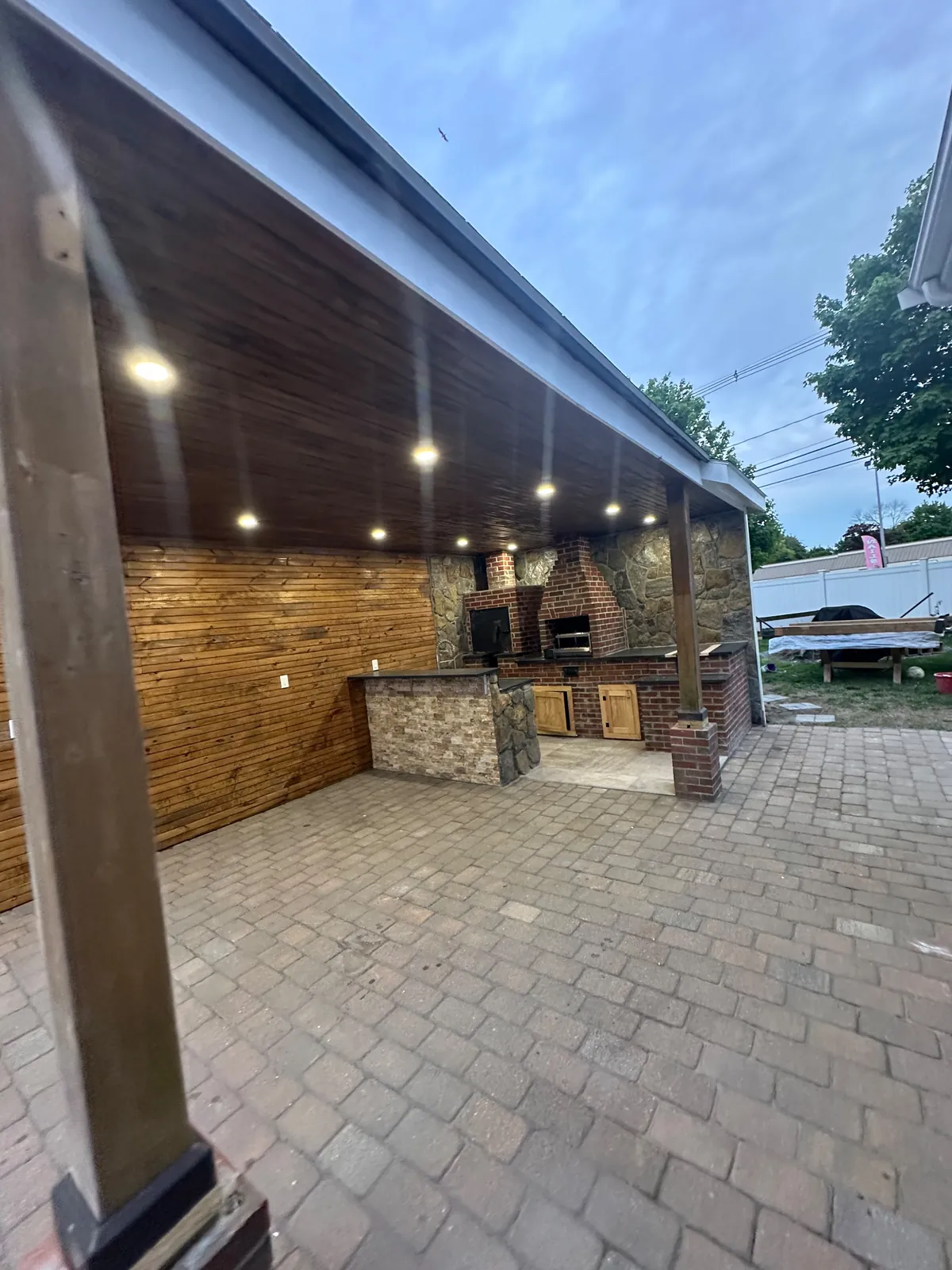
Massachusetts summers are short, which is exactly why people want to make the most of them. A well-built patio gives you a place to eat outside, gather around a grill and stay out a little later on warm evenings. Add an outdoor kitchen, a pizza oven or a covered pavilion and the backyard starts to work like another room of the house.
We build paver patios, brick outdoor kitchens and covered pavilions, including pizza ovens with fieldstone walls. This guide covers what makes a patio last through our freeze-thaw winters, how pavers compare to poured concrete, and what goes into an outdoor kitchen and pavilion for homes in towns like Foxborough and Mansfield.
Why the base matters more than the pavers
The pavers on top get all the attention, but the base underneath decides how the patio looks in five years. A typical paver patio starts with excavation below the topsoil, followed by layers of crushed stone base compacted in lifts with a plate compactor, then a thin bedding layer of sand or fine stone, and finally the pavers.
Each layer is graded with a slight slope away from the house so rain and melting snow drain off. Edge restraints hold the pavers in place, and polymeric sand swept into the joints helps lock them together and limit weeds. Skipping compaction or cutting the base thin to save money is the most common reason patios sink and shift.
Frost heave and New England winters
In Massachusetts, the ground freezes and thaws many times each winter. Water trapped in the soil expands when it freezes and lifts whatever sits on top, which is called frost heave. Poorly drained, clay-heavy soil makes it worse, and the result is humps, dips and loose pavers by spring.
A deep, well-compacted, free-draining stone base is the main defense. Good drainage around downspouts, and keeping water from pooling against the patio edges, also helps. Pavers have an advantage here: because they are separate units, they can move slightly without cracking, and a section that settles can be lifted and reset rather than torn out.
Pavers vs poured concrete
Poured concrete is often the lower-cost option up front and gives a smooth, continuous surface. The downside is that concrete slabs can crack from frost movement and settling, and cracks are hard to repair without the patch showing. Stamped concrete adds pattern and color but needs resealing over time.
Concrete pavers and natural stone typically cost more at the start but offer more design options (colors, patterns, borders) and are easier to repair. As a broad market picture in Massachusetts, paver patios often fall into a moderate to higher per-square-foot range, and costs can vary widely with size, access, base depth, steps and walls. An on-site estimate is the only way to know your real number.
Building an outdoor kitchen in brick or stone
An outdoor kitchen can be as simple as a built-in grill island or as complete as a full counter with a sink, refrigerator and storage. Brick and stone are popular choices here because they hold up to weather and look solid next to a paver patio. The counter is typically built on its own concrete pad or footing so it does not shift separately from the patio.
Planning the utilities early matters. Gas lines, electrical outlets and any water supply or drain need to be run before the patio is finished, and that work is done by licensed trades with their own permits. Countertops are often stone or poured concrete, and the layout should keep the grill a safe distance from the house and from any overhead structure.
Pizza ovens and fireplaces
A wood-fired pizza oven is one of the most requested features in an outdoor kitchen. Brick ovens are built on a solid base with a firebrick cooking floor and dome, an insulating layer, and a masonry or stone shell. A fieldstone or brick wall around the oven ties it into the rest of the yard.
Ovens and outdoor fireplaces get very hot, so clearances, chimney height and the materials around them matter. Check with your town's building department and fire department on what is required for wood-burning features in your area. Building with care in the details is what keeps the masonry from cracking through years of heating and cooling.
Covered pavilions and gazebos
A covered pavilion over the kitchen or seating area extends the season. It gives shade on hot afternoons, keeps the grill area dry in a summer shower and lets you add lighting and ceiling fans. Pavilions are typically framed with posts on concrete footings below the frost line, beams and roof rafters, and finished with a shingled or metal roof.
Because a pavilion is a structure, it usually needs a building permit and has to be designed for the snow loads we get in Massachusetts. Zoning setbacks apply too, so the location on the lot should be checked before design. Combined with a paver patio and a brick pizza oven, it creates an outdoor space you will actually use from spring into fall.
Planning, timing and permits
The best time to build patios and masonry in Massachusetts is from spring through fall, when the ground is not frozen and mortar and concrete can cure properly. Planning in winter is a good idea, since spring calendars fill up fast.
Patios on grade often do not need a building permit, but structures, gas lines, electrical work, retaining walls over a certain height and anything near wetlands usually do, depending on the town. If you are thinking about a new patio, an outdoor kitchen or a covered pavilion, we can look at your yard, talk through the layout and give you a free estimate.
Frequently asked questions
- Are pavers better than concrete for a patio in Massachusetts?
- Pavers handle freeze-thaw movement better because they can shift slightly without cracking, and damaged areas can be lifted and reset. Concrete often costs less up front but can crack and is harder to repair neatly.
- How deep should a paver patio base be?
- It depends on the soil, drainage and use, but patios in cold climates usually need a deeper compacted stone base than in warmer regions. Your installer should check the soil and drainage before setting the depth.
- Do I need a permit for an outdoor kitchen or pavilion?
- Often, yes. Covered structures, gas lines, electrical and some masonry features usually need permits. A patio on grade may not. Requirements vary by town, so check with your building department.
- How long does it take to build a patio and outdoor kitchen?
- A paver patio alone often takes a few days to a couple of weeks depending on size. Adding a brick outdoor kitchen, pizza oven or pavilion can extend the project to several weeks.
- What causes pavers to sink or heave?
- Usually a thin or poorly compacted base, poor drainage or water collecting at the edges. Frost heave in winter makes these problems show up quickly.
Related services
Serving
Ready for an exact price?
Get a free, no-pressure in-home estimate. Real numbers for your home, not a phone guess.