
How Much Does a Kitchen Remodel Cost in Massachusetts? (2026 Guide)
· By Ismar A. Da Silva
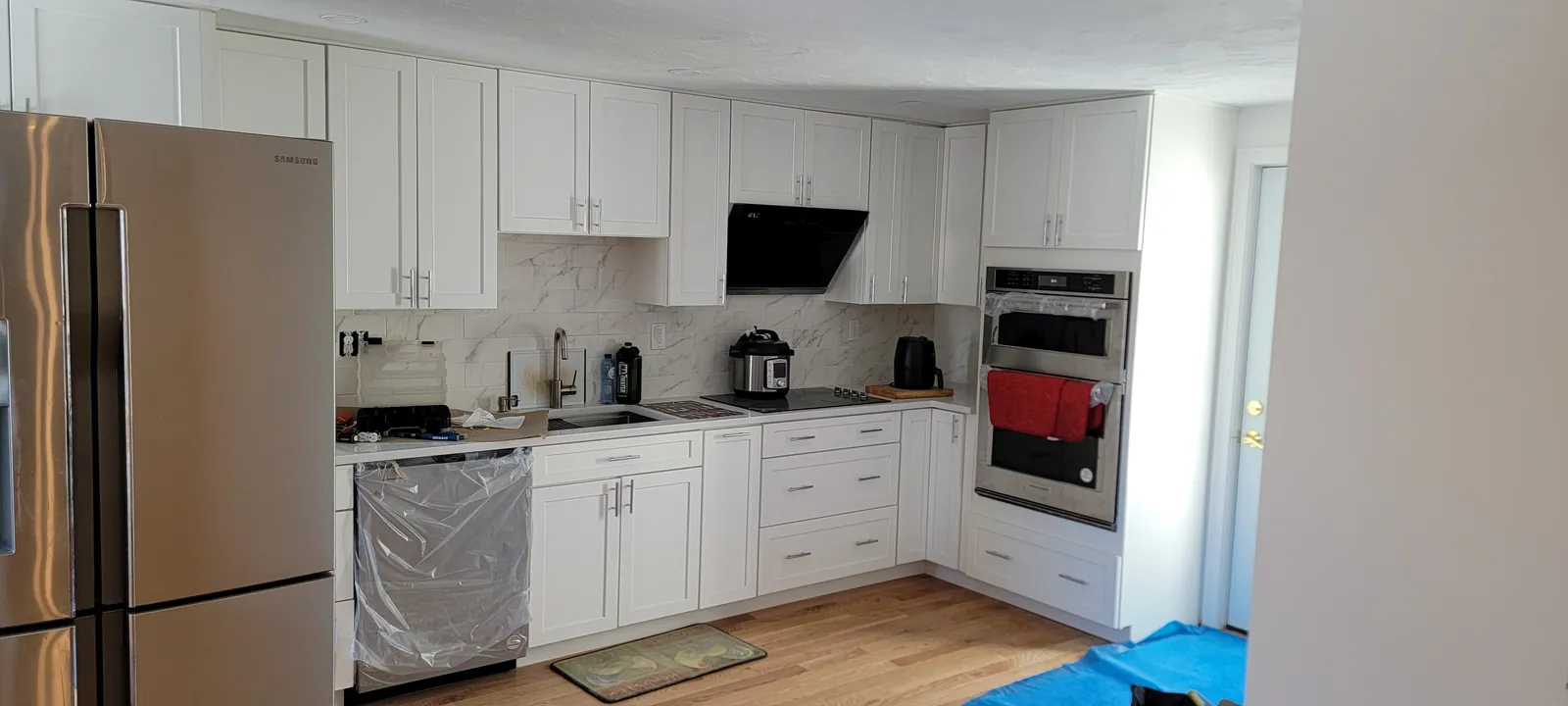
Kitchens get used harder than any other room in the house, and they are also the room where remodel budgets vary the most. A cabinet and countertop update in the same footprint is a very different project from opening a wall in a 1960s ranch to create an open floor plan.
Below are typical market ranges for Massachusetts, a breakdown of where the money usually goes, and the questions worth answering before you sign anything. These are general numbers, not a quote. The final price always depends on your house, your layout and the finishes you choose.
Typical kitchen remodel ranges in Massachusetts
A cosmetic or minor kitchen update, such as new cabinet doors or paint, a new countertop, a backsplash, a sink and faucet and some lighting, often falls somewhere around $20,000 to $40,000 in Massachusetts. A mid-range remodel with new semi-custom cabinets, quartz countertops, tile backsplash, new flooring and appliances in roughly the same layout typically lands in the $45,000 to $90,000 range.
Larger kitchens, layout changes, structural work, custom cabinetry and premium appliances can push a project past $100,000. Labor and material costs in the greater Boston area run higher than many national averages, so online calculators often come in low. Treat any range, including these, as a budgeting guide and confirm it with an on-site estimate.
Cabinets: usually the biggest line item
Cabinets often take a third or more of the total budget. Stock cabinets come in fixed sizes and are the most affordable. Semi-custom lines give you more sizes, finishes and storage options. Fully custom cabinetry is built for your exact space and costs the most.
White shaker doors remain one of the most requested styles because they look clean and work with almost any countertop and backsplash. Whatever style you choose, pay attention to box construction, drawer slides and hinges. Soft-close drawers and plywood boxes cost a little more and tend to hold up far better than particleboard after years of daily use.
Countertops: quartz, granite and the rest
Quartz is the most common choice in the kitchens we see today because it is consistent, does not need sealing and resists stains. Granite is still popular and can cost about the same depending on the slab. Marble looks beautiful but etches and stains more easily, which is why many homeowners pick a marble-look quartz instead.
Countertop pricing is usually by the square foot, installed, and the edge profile, number of seams, sink cutouts and waterfall ends all add cost. An island or peninsula adds surface area quickly. Templating happens after the cabinets are set, so countertops are one of the things that determine how long the kitchen stays out of service.
Backsplash and flooring
Backsplash tile is a smaller part of the budget, but the choice matters for labor. A classic white subway tile goes up quickly. Marble-look porcelain slabs, herringbone patterns, small mosaics and natural stone take more time and more cuts around outlets and windows.
Flooring is easiest to replace when the cabinets are out. Many homeowners run hardwood or luxury vinyl plank continuously from the kitchen into the dining and living areas, which looks better than patching around old cabinets. If you have an older home, the subfloor may need leveling or repair before the new floor goes down.
Layout changes and opening walls
Keeping the sink, range and refrigerator where they are keeps plumbing, gas and electrical costs down. Moving the sink to an island, relocating a range with a new hood vent, or adding a peninsula all add trade work and sometimes floor or ceiling repairs.
Removing a wall is common in older Colonials and ranches around Walpole and Norwood where the kitchen feels closed off. If that wall is load-bearing, it needs an engineered beam and a permit, and that can add a significant amount to the project. A non-bearing wall is much simpler, but it may still have wiring, ductwork or plumbing running through it.
Electrical, lighting and appliances
Most kitchen remodels in older homes need electrical upgrades. Modern kitchens typically call for dedicated circuits for appliances, GFCI protection near water, and better lighting like recessed cans and under-cabinet LEDs. If your panel is already full, a service upgrade may come into play.
Appliances are often bought separately by the homeowner, and they can range from a few thousand dollars to well over $20,000 for a premium package. Choose them before the cabinets are ordered, because the cabinet layout depends on the exact sizes of the range, refrigerator, dishwasher and microwave.
Permits and timeline
In Massachusetts, kitchen remodels that involve electrical, plumbing, gas or structural changes typically need permits through your town's building department, followed by inspections. Home improvement work on existing owner-occupied one to four family homes should be done by a registered Massachusetts Home Improvement Contractor. Your contractor normally pulls the building permit and coordinates the inspections.
Once work starts, a mid-range kitchen often takes six to ten weeks: demolition, rough-in, inspections, drywall, cabinets, countertop template and install, backsplash, flooring and finish work. The biggest delays usually come from cabinet lead times, so ordering early is the best way to shorten the time you are without a kitchen.
Where to save and where to spend
Good places to save: keep the layout, choose a stock or semi-custom cabinet line, pick a simple backsplash, and keep the premium finish for the island or one focal wall. Painting existing cabinets can work when the boxes are in good shape.
Places worth spending on: cabinet construction, proper ventilation, good lighting and electrical work done right the first time. If you are planning a kitchen in Sharon, Foxborough or a nearby town, a free estimate is the easiest way to see how your wish list lines up with your budget before you commit.
Frequently asked questions
- How much does a kitchen remodel cost in Massachusetts?
- A minor update often falls around $20,000 to $40,000, a mid-range remodel typically lands between $45,000 and $90,000, and large or high-end kitchens can pass $100,000. Costs vary widely by size, layout and finishes, so an on-site estimate gives the real number.
- Is quartz worth the cost over laminate?
- For most homeowners, yes. Quartz is durable, stain resistant and does not need sealing, and it holds up to daily cooking far better than laminate. Laminate makes sense only when the budget is very tight or the home is a short-term rental.
- Do I need a permit to remodel my kitchen?
- Permits are typically required when the work involves electrical, plumbing, gas or structural changes. They are pulled through your town's building department, and inspections are part of the process.
- How long will I be without a kitchen?
- A mid-range kitchen often takes six to ten weeks of active work. Ordering cabinets and appliances before demolition, and setting up a temporary kitchen in another room, makes that time much easier.
- Can I save money by keeping my cabinets?
- If the cabinet boxes are solid and the layout works, painting or refacing them and adding a new countertop and backsplash can save a large share of the budget. If the boxes are damaged or the layout does not work, new cabinets are usually the better long-term choice.
Related services
Ready for an exact price?
Get a free, no-pressure in-home estimate. Real numbers for your home, not a phone guess.