
Remodeling an Easton, MA Home: Older Houses, Wooded Lots and Septic Questions
· By Ismar A. Da Silva
Remodeling in Easton is a little different from remodeling in a more suburban grid. Between the historic buildings of North Easton, the wooded lots that cover much of town and the number of homes on private septic, there are a few things worth understanding before you commit to a design. None of them are reasons not to remodel. They are reasons to plan.
We work in Easton regularly from our base next door in Sharon, and this guide covers what we see most often: older homes and how to update them without losing what makes them good, how trees and shade affect the outside of a house, what septic and wells can mean for adding a bathroom, and how permits generally work through the Easton Building Department.
Older homes: what is worth keeping
North Easton village, Furnace Village and the older roads around town have homes built long before modern kitchens and bathrooms were standard. These houses often have plaster walls, original wood floors, solid trim and staircases that would be expensive to reproduce today. The first question on an older home is not what to tear out. It is what to save.
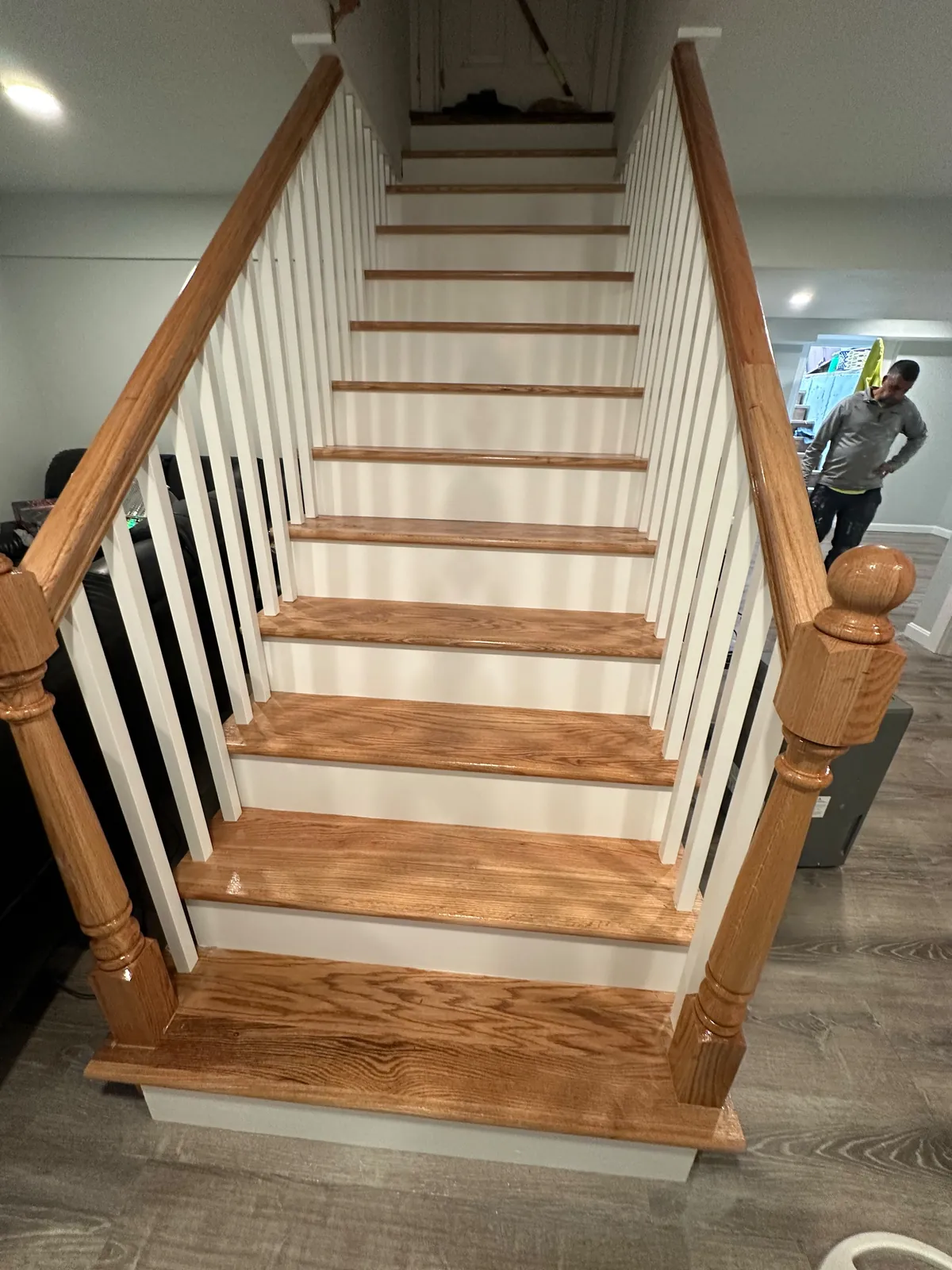
Original hardwood under old carpet is a common find. If the boards are thick enough and not badly damaged, refinishing is often a better choice than replacing, and it keeps the look consistent with the rest of the house. Oak staircases can usually take new treads or a refinish, and adding new balusters and a railing can make an old stairway feel current without changing its character.
Plaster walls are another judgment call. Patching plaster is fine for small areas, but when a kitchen or bathroom is being gutted, it usually makes sense to open those walls fully, update wiring and plumbing, add insulation where possible and close them back up with drywall.
What to expect when walls come open
Older Easton homes almost always hold some surprises. We regularly see framing that is not square, floor joists that were notched for old plumbing, outdated wiring and spots where an earlier owner did a quick fix. In homes from the 1960s and 70s, like the many ranches and split-levels in South Easton and Eastondale, the surprises are usually smaller, but old tub surrounds and subfloors near toilets can still hide water damage.
That is why we talk about a contingency at the estimate. Many homeowners set aside something like 10 to 15 percent for older homes. If nothing comes up, that money stays in your pocket. If something does, the job keeps moving without a hard stop.
Wooded lots, shade and moisture
Much of Easton is wooded, which is a big part of why people love living here. Trees also change how a house ages. Shaded siding, trim and decks stay damp longer after rain, which encourages mildew and makes paint and wood wear faster, especially on the north side of the house. Leaves fill gutters quickly in the fall, and clogged gutters push water toward the foundation.
For exterior painting, that means good prep matters more than usual: washing, scraping and priming bare wood before paint goes on. For decks, composite decking with vinyl railings holds up better in shade than untreated wood. For basements, keeping gutters clear and extending downspouts away from the foundation is the first step before any finishing work.
Septic, wells and adding a bathroom
Many Easton homes are on private septic systems, and parts of town rely on private wells. For a kitchen or bathroom remodel that stays the same size, this usually is not a big factor. It becomes important when you want to add a bathroom, add a bedroom or finish a basement with a bedroom in it.
Septic systems are typically sized by the number of bedrooms, so adding a bedroom can trigger a review by the board of health. Adding a bathroom in a basement can also raise practical questions about how waste gets to the septic line, which may mean an ejector pump. We bring this up early so you can check with the town before the design is final. It is much easier to adjust a plan on paper than in the middle of framing.
Permits through the Easton Building Department
Most remodeling beyond paint and simple finishes requires a building permit, usually along with electrical and plumbing permits when that work is involved. Permits are handled through the Easton Building Department, with inspections at stages like rough framing, rough electrical and plumbing, insulation and final.
In Massachusetts, home improvement work on existing one to four family owner-occupied homes is done by state-registered contractors. We are registered as MA HIC #213306. If your home is in or near a historic area, or you are planning exterior changes visible from the street, it is worth asking the town whether any extra review applies before you finalize the plan.
Updating a kitchen or bath without losing character
In an older Easton home, the most successful remodels usually mix new function with materials that fit the house. Shaker cabinets work well in both antique Colonials and newer homes, because the simple door style feels traditional without looking dated. Quartz countertops, a tile backsplash and better lighting do most of the modernizing.
In bathrooms, a tiled walk-in shower with a recessed niche and a glass door can sit comfortably in an older house, especially with marble-look tile and classic fixtures. The important part is behind the tile: a proper drain rough-in, cement backer board and a liquid waterproofing membrane so the shower lasts.
Planning around long driveways and the seasons
Larger lots and long driveways are common in Easton, so we plan dumpster and delivery locations at the first visit to keep the lawn and driveway in good shape. Exterior projects like decks, patios and painting are best done from spring through fall, while interior remodels run well through the winter.
If you are thinking about updating an Easton home, a free estimate is the easiest way to start. We can look at the house, point out what is worth keeping, flag any septic or permit questions and give you a clear idea of the scope before you decide anything.
Frequently asked questions
- Is it worth refinishing the original floors in my older Easton home?
- Often, yes. If the boards are thick enough and not badly damaged, refinishing usually costs less than replacing and keeps the original character. We check the floor at the estimate and tell you honestly whether it can be saved.
- Will adding a bathroom affect my septic system?
- It can. Septic systems are usually sized by bedrooms, and adding a bedroom may need board of health review. A basement bathroom may also need an ejector pump. Check with the town early, before the design is final.
- How do I protect exterior paint on a shaded, wooded lot?
- Good prep is the key: wash, scrape and prime bare wood before painting, keep gutters clear and trim back branches touching the house. Shaded sides still wear faster, so plan on checking them more often.
- Do you work in North Easton and South Easton?
- Yes. We work throughout Easton, including North Easton, South Easton and Furnace Village, as well as nearby Sharon, Stoughton and Mansfield.
Ready for an exact price?
Get a free, no-pressure in-home estimate. Real numbers for your home, not a phone guess.