
Composite Deck vs Wood Deck in Massachusetts: Cost, Winters and Upkeep
· By Ismar A. Da Silva
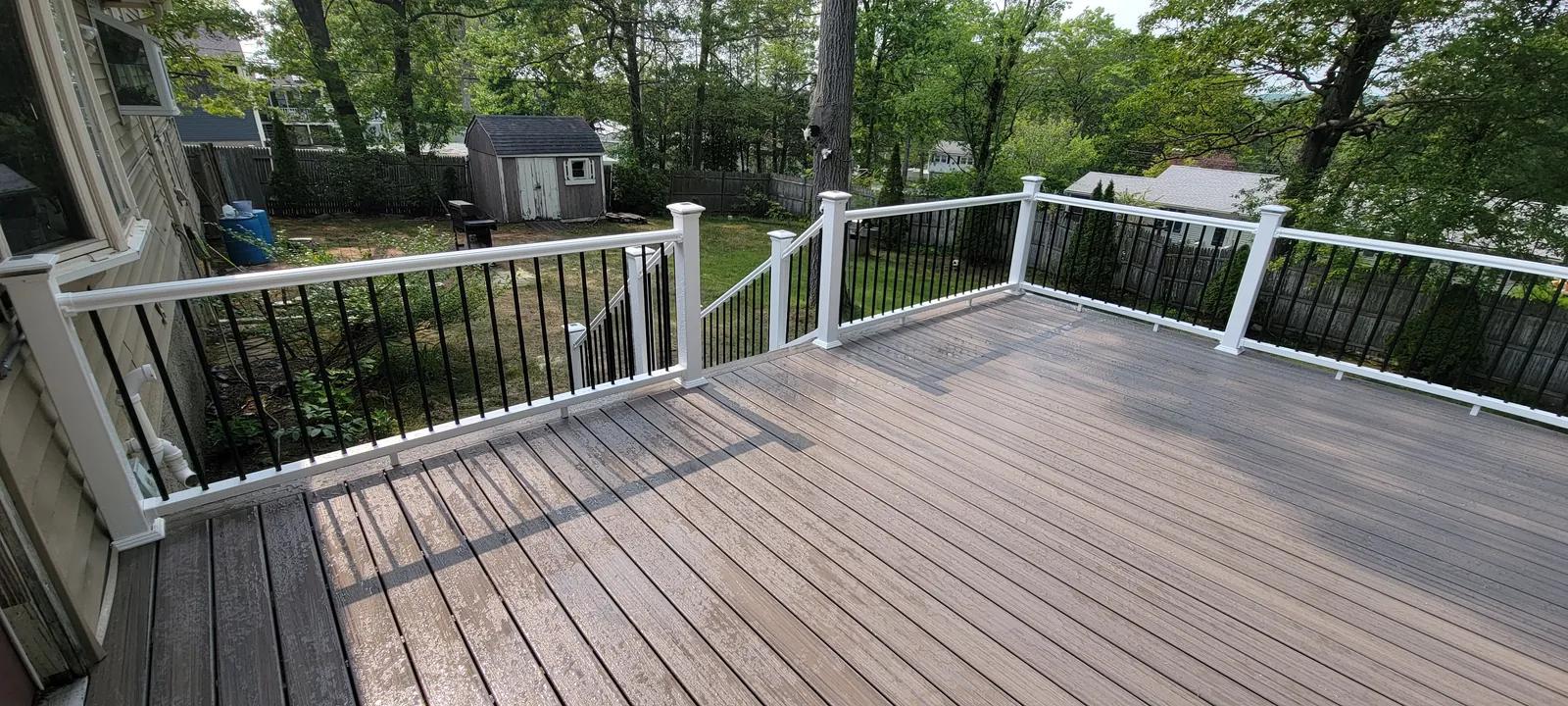
Most homeowners who call about a new deck have already narrowed it down to two choices: pressure-treated wood or composite boards. Both are common across Massachusetts, and both can give you a solid, good-looking deck. The difference shows up over the next ten or fifteen years, after a few rounds of snow, ice, spring rain and summer sun.
This guide walks through how we explain the decision to homeowners in towns like Sharon and Foxborough: what each material typically costs, how it handles a New England winter, what the railing and framing options look like, and what the permit process involves. The goal is to help you pick the deck that fits how you actually use your yard.
What you are really choosing: the surface, not the structure
Here is the part many people miss. Whether you choose composite or wood, the frame underneath is almost always pressure-treated lumber: the posts, beams, joists and ledger. Composite refers to the decking boards you walk on, and often the stair treads, fascia and railing.
That matters because the frame is what carries the load and what has to survive moisture for decades. A composite deck on a poorly built frame will still fail. When you compare quotes, ask about the framing as much as the boards: joist size and spacing, how the posts sit on footings, and how the ledger is attached and flashed against the house.
Typical cost ranges in Massachusetts
Prices can vary widely depending on size, height, stairs, railing style, site access and how much demolition is involved. As a rough market picture, a basic pressure-treated deck in Massachusetts often lands in a lower range per square foot, while a composite deck with matching composite or vinyl railing typically costs noticeably more up front, sometimes 30 to 60 percent more for the same footprint.
Where the numbers start to even out is maintenance. Wood needs cleaning, staining or sealing every couple of years to stay in good shape, and boards get replaced as they split or cup. Composite still needs washing, but it does not need stain. Over a long stretch of years, the total cost gap often narrows. The only way to know your real number is an on-site estimate that measures the space and looks at the grade and the house.
How each material handles a New England winter
Our winters are hard on outdoor wood. Snow sits on the boards, melts during a sunny afternoon, refreezes overnight, and works its way into every check and crack. Pressure-treated wood resists rot, but the surface still grays, splinters and opens up if it is not sealed. Ice melt products and shoveling also wear the finish.
Composite boards handle moisture better because they do not soak up water the same way, and they do not split from freeze-thaw cycles. They do expand and contract with temperature, so the gapping and fastening have to follow the manufacturer's instructions, especially when boards are installed in cold weather. Use a plastic shovel on composite, and check which ice melt the board maker allows before you use it.
Railings: vinyl, composite, aluminum or wood
The railing is a big part of how a deck looks from the yard and from inside the house. White vinyl railings with black balusters are a popular choice here because they stay clean-looking, do not need paint and pair well with gray or brown composite boards. Composite railing systems and aluminum railings are other low-maintenance options.
Wood railings are the most affordable but need the same staining or painting cycle as the deck boards, and the top rail takes the worst of the weather. Whatever you choose, the railing has to be anchored properly into the framing. A wobbly post is usually a sign of weak blocking or fasteners, not a bad product. Height and baluster spacing requirements are set by code, and your town's building department will check them.
Pressure-treated framing done right
Because the frame is wood either way, we pay close attention to it. Posts typically sit on concrete footings that go below the frost line so the deck does not heave in winter. Joists are sized for the span, and composite boards often call for closer joist spacing than wood, especially on diagonal layouts.
A few details make a big difference over time: joist tape on top of the joists to keep water out of the fastener holes, proper flashing where the ledger meets the house, galvanized or coated hardware rated for treated lumber, and enough airflow under low decks. Water that gets behind a ledger is one of the most common reasons we see rot in rim joists on older Massachusetts homes.
Permits and inspections for decks
In Massachusetts, a new deck or a rebuild that changes the structure typically requires a building permit from your town's building department, whether you live in Sharon, Foxborough, Mansfield or Canton. The permit application usually includes a simple plan showing the size, height, footing layout, framing and railing details.
Inspections often happen at the footing stage before concrete is poured, and again at the end. Some towns also want to see the framing before decking goes down. Zoning setbacks from your property line can affect how big or where the deck can go, so it is worth checking that early. A home improvement contractor registered in Massachusetts handles this paperwork as part of the job.
Which one fits your home
Wood is a good fit if you want the lowest up-front cost, you like the look of natural lumber and you do not mind a staining routine. It also makes sense for a smaller deck or a home you plan to sell in a few years.
Composite tends to fit homeowners who want less weekend upkeep, plan to stay in the house for a long time, or have a deck that gets full sun or heavy snow. Many of the decks we build pair composite boards and stairs with white vinyl railings, and some include a covered gazebo for shade. If you are deciding between the two, we are happy to walk the yard with you and give you a free estimate on both options side by side.
Frequently asked questions
- Is a composite deck worth it in Massachusetts?
- For many homeowners, yes. Composite costs more up front, but it does not need stain, does not split from freeze-thaw cycles and keeps its color better. If you plan to stay in your home for many years, the lower maintenance often makes up for much of the price difference.
- Does a composite deck still use wood framing?
- Almost always. The posts, beams and joists are typically pressure-treated lumber. That is why framing details like footings below the frost line, joist tape and ledger flashing matter just as much on a composite deck as on a wood one.
- Can you shovel snow off a composite deck?
- Yes. Use a plastic shovel rather than a metal one so you do not scratch the boards, and check the board manufacturer's guidance before using any ice melt product.
- Do I need a permit to build a deck in Massachusetts?
- In most cases, yes. New decks and structural rebuilds typically require a building permit and inspections through your town's building department. Your contractor usually prepares the plan and pulls the permit.
- How long does it take to build a deck?
- Many average-size decks take one to two weeks of work once the permit is approved and materials arrive. Footing inspections, weather and stairs or covered structures can add time.
Related services
Serving
Ready for an exact price?
Get a free, no-pressure in-home estimate. Real numbers for your home, not a phone guess.