
Canton, MA Home Remodeling Guide: Wooded Lots, Walkout Basements and Older Colonials
· By Ismar A. Da Silva
Canton is one of those towns where the land shapes the houses. With the Blue Hills on one side, ponds like Ponkapoag and Reservoir Pond, and plenty of wooded, sloped lots, many homes here sit differently on their property than a typical flat-lot house. That affects basements, drainage, exterior paint and even how materials get delivered.
This guide looks at remodeling in Canton through that lens. We cover what the setting means for basements and exteriors, how older Colonials near Canton Center differ from mid-century ranches and newer homes, how permits work in town, typical cost ranges, and how to time your project around the seasons.
How Canton's landscape affects a remodel
Homes near the Blue Hills Reservation and around Ponkapoag often sit on wooded lots with noticeable slopes. A slope can be a gift, because it often creates a walkout or partially exposed basement with windows and a door to the yard. It can also be a challenge, since water runs downhill and the uphill side of the foundation takes the brunt of rain and snowmelt.
Mature trees bring shade and privacy, but they also keep some walls damp, drop leaves that clog gutters, and send roots toward foundations and patios. When we look at a Canton project, we pay attention to where water goes, which sides of the house stay shaded, and how equipment and materials will reach the work area on a tight or sloped driveway.
Walkout and partially exposed basements
A walkout basement is one of the best spaces to finish. Natural light and a direct exit make it feel like part of the house rather than a cellar, and the exterior door can help with egress if you are planning a bedroom. Many Canton homeowners use these spaces for a family room, home office, guest suite or gym.
The work starts with water. On a sloped lot we check the uphill foundation wall, look for stains and efflorescence, and make sure gutters and downspouts carry water well away from the house. Regrading or improving drainage outside is often cheaper than fighting moisture inside later.
Once the space is dry, the finish should still respect that it is below grade on at least one side. That means insulation suited to foundation walls, a floor like luxury vinyl plank that handles humidity better than solid hardwood, good lighting, and a staircase that feels safe and finished. Recessed lights and light-colored wall finishes go a long way in the deeper part of the room.
Older Colonials near Canton Center and Canton Junction
The older parts of town, around Canton Center and Canton Junction, have many older Colonials and some antique homes. These houses often have character worth keeping: original trim, wide doorways, solid wood stairs. They also tend to have settled framing, plaster walls and plumbing and wiring that have been updated in pieces.
Remodeling these homes is about balance. You want modern kitchens and bathrooms that work well, without stripping out the details that make the house feel like itself. In practice that means careful demo, protecting woodwork you want to keep, leveling floors before tile or cabinets, and budgeting for the corrections that older houses almost always need once walls are opened.
Ranches, split-levels and newer Colonials
Canton also has plenty of 1950s and 60s ranches and split-levels, plus newer Colonials. These homes usually have more predictable framing, which can make kitchen and bathroom layouts easier to change. Ranch kitchens are often closed off, and opening them toward the living area is a common request that may require structural work and a permit.
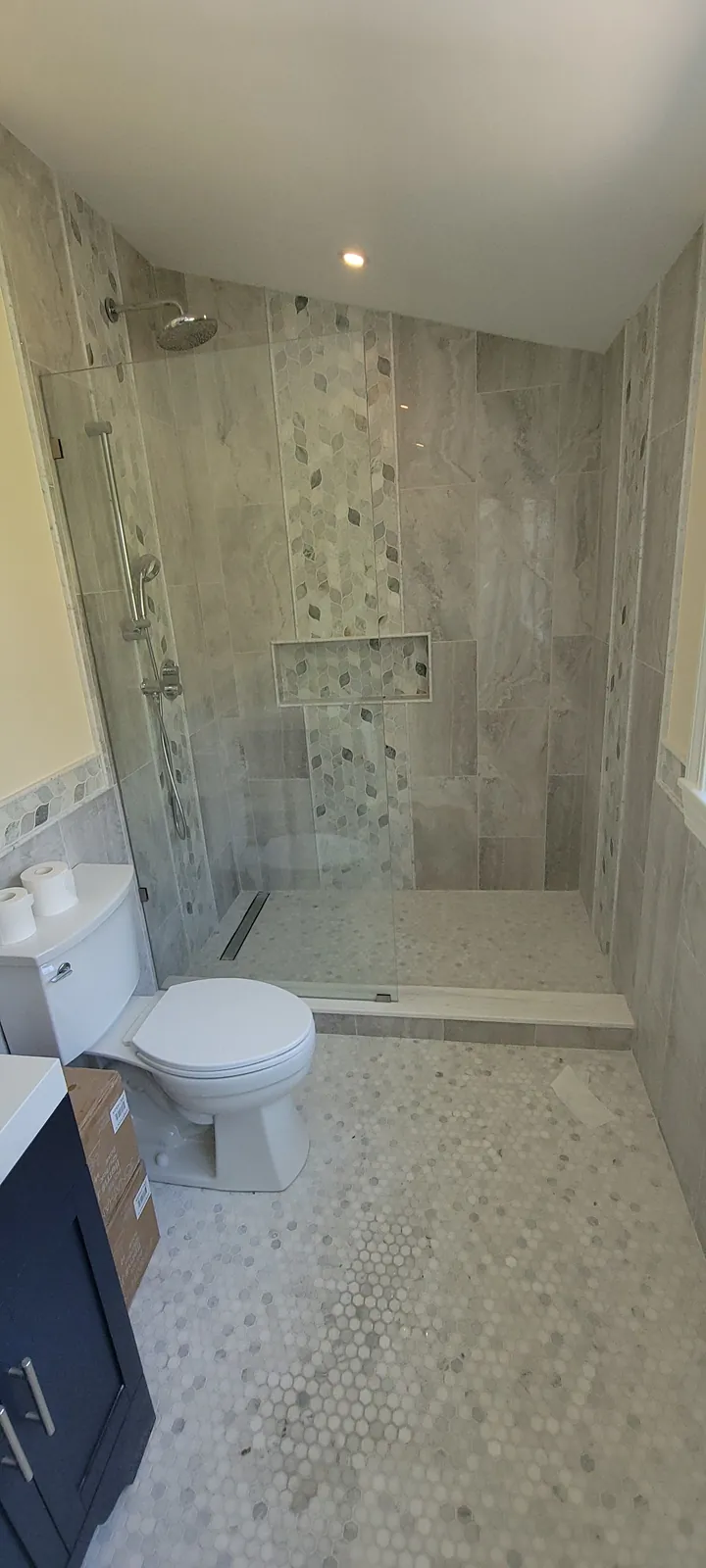
In newer Colonials, the typical projects are primary bathroom upgrades, finishing the basement, and replacing builder-grade finishes with tile showers, better flooring and updated kitchens. Showers in these projects should be built properly from the subfloor up, with correct drain rough-in, cement backer board and a liquid waterproofing membrane under the tile.
Exterior paint on shaded, wooded lots
Paint fails faster on the shaded, damp sides of a house. Moisture sits in the siding and trim longer after rain, mildew finds a foothold, and paint can peel or blister. On wooded Canton lots, it is common to see one side of a house looking fine while the north or tree-covered side needs attention.
The answer is preparation more than paint brand. Cleaning mildew, scraping loose paint, repairing or replacing soft trim, priming bare wood and letting the surface dry before coating all help the finish last. Trimming branches back from the house and keeping gutters clear also extends the life of the job.
Permits through the Canton Building Department
Most remodeling beyond cosmetic updates typically needs a permit, including structural changes, plumbing, electrical and basement finishing. In town, permits are handled by the Canton Building Department, with inspections at stages such as rough framing, rough plumbing and electrical, and final.
In Massachusetts, home improvement work on existing one to four family owner-occupied homes is done by registered Home Improvement Contractors. Ask for the HIC number and confirm who is pulling permits. Exterior work like decks and some additions may also involve setback or zoning questions, so it is worth checking with the town early when a project changes the footprint of the house.
Typical costs and what drives them
Prices can vary widely, so online numbers are only a rough guide. In Massachusetts, a full bathroom remodel often runs into the tens of thousands of dollars, kitchens typically cost more depending on cabinets, countertops and layout changes, and basement finishing is usually priced by square footage and level of finish.
In Canton, a few local factors can move the number: drainage or grading work around a basement, extra prep on older homes, and access on steep or tight driveways. A free on-site estimate is the most reliable way to see how those factors apply to your house.
When to schedule your Canton project
Interior projects such as kitchens, bathrooms and basements can run through the winter, so booking them in the fall is a good way to have the work done while you are spending more time indoors. Exterior painting, decks and patios fit best from late spring into early fall, when the weather is dry and warm enough for materials to cure.
If your project involves drainage or grading before a basement finish, plan that outside work for the warmer months and the interior finish right after. Ordering cabinets, windows and special tile early also helps, since lead times of several weeks are common.
Frequently asked questions
- Is a walkout basement in Canton worth finishing?
- Often yes. Walkouts get daylight and an exterior door, which makes them feel like real living space. The key is confirming the space stays dry and choosing basement-friendly insulation and flooring.
- Why does paint peel on one side of my Canton house?
- Shaded sides of a house stay damp longer, especially on wooded lots. That moisture leads to mildew and peeling. Good prep, priming bare wood and improving airflow and drainage near that wall help paint last longer.
- Do I need a permit to remodel in Canton?
- Structural, plumbing, electrical and basement finishing work typically need a permit through the Canton Building Department. Cosmetic projects like painting usually do not. Your contractor should confirm and pull the permits.
- Can you keep the original trim in my older Canton Colonial?
- In many cases, yes. With careful demo, original trim and woodwork can be protected or removed and reinstalled, while the rest of the room is updated around it.
- How do I start planning a remodel in Canton?
- Make a list of what bothers you most, set a budget range, and schedule a free on-site estimate. The contractor can check drainage, framing and access and give you a written scope.
Ready for an exact price?
Get a free, no-pressure in-home estimate. Real numbers for your home, not a phone guess.