
How Much Does a Bathroom Remodel Cost in Massachusetts? (2026 Guide)
· By Ismar A. Da Silva
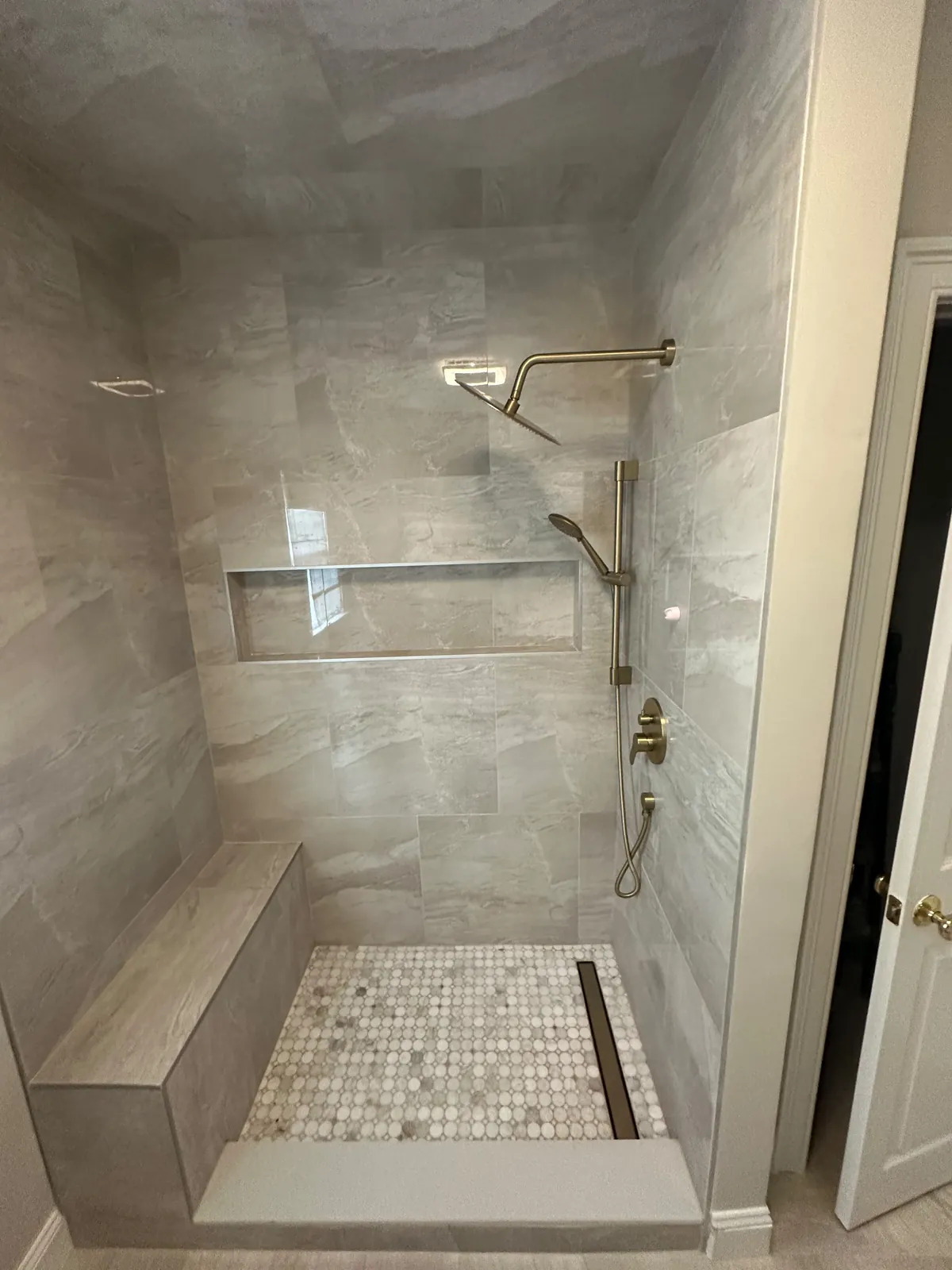
The first question almost every homeowner asks about a bathroom remodel is what it is going to cost. The honest answer is that it depends on what is behind the walls as much as what you pick at the tile store. Two bathrooms the same size on the same street can land thousands of dollars apart because one has a sound subfloor and the other has thirty years of slow leaks under the tub.
This guide walks through typical market ranges in Massachusetts, the decisions that push a project up or down, and the places where saving money makes sense and where it usually backfires. The numbers here are general market ranges, not a quote. Every bathroom is different, and the only way to get a real number is to have someone look at the space.
Typical bathroom remodel ranges in Massachusetts
For a basic refresh that keeps the layout, replaces the vanity, toilet, lighting and floor, and swaps a tub for a new tub or a one-piece shower insert, Massachusetts homeowners often see prices somewhere around $10,000 to $20,000. Labor costs in the Boston area and the surrounding suburbs tend to run higher than the national averages you see online, so those national numbers can be misleading here.
A full gut remodel of a hall or primary bathroom, down to the studs, with a custom tiled shower, new plumbing valves, new subfloor where needed, a new vanity and fresh drywall, typically lands in the $25,000 to $45,000 range. Larger primary baths with heated floors, custom glass, double vanities and high-end tile can go well past $50,000. These ranges can vary widely by town, by home and by finish level, so treat them as a starting point for budgeting, not a promise.
Tile is where budgets quietly grow
Tile affects cost in two ways: the price of the material and the labor to install it. A plain 12x24 porcelain on the floor goes down much faster than a herringbone pattern, a mosaic, or large marble-look slabs that need careful leveling. Small tiles like pebble or hex mosaics take longer to set and grout, which is why a shower floor in pebble can cost more in labor than the walls around it.
How much tile you use matters too. Tiling a shower to the ceiling, running tile behind the vanity, or doing a full wainscot adds square footage and cuts. A good way to control cost is to put your special tile where it shows, like a feature wall in the shower or the niche, and use a simpler, durable porcelain for the rest.
Walk-in showers and tub-to-shower conversions
Turning an old tub into a tiled walk-in shower is one of the most popular projects we see, and it is also one of the most variable in price. A proper tiled shower needs a correctly sloped base, a real waterproofing system, backer board or foam board, a new valve, and often a new drain location. Add a built-in bench, a recessed niche and frameless glass, and the shower alone can be a large share of the total.
If budget is tight, a one-piece shower insert or an acrylic base with tiled walls can bring the number down. If you want a curbless or low-threshold shower, expect extra work in the floor framing so the base can be recessed. That is worth it for aging in place, but it is not a cheap change.
Changing the layout and moving plumbing
Keeping fixtures where they are is the single biggest money saver in a bathroom. Moving a toilet a few feet can mean cutting joists, rerouting the drain and venting, and sometimes opening the ceiling below. Moving a shower or vanity to another wall has similar ripple effects.
Sometimes a layout change is the whole point of the project, and it can be worth it. Just know that every fixture you move adds plumbing labor, inspection time and repair work on walls and ceilings around it. A good contractor will tell you which moves are simple and which ones are expensive before you fall in love with a drawing.
Older homes: what we often find behind the walls
Much of the housing stock around Sharon, Canton and Norwood is older Colonials, Capes and 1950s and 60s ranches. Those bathrooms were built well for their time, but after decades of use we often find cast iron drains near the end of their life, galvanized supply lines, old mud-set tile that has to come out in heavy chunks, and soft subfloor around the toilet or tub.
None of that is visible on a walkthrough, which is why it makes sense to keep a contingency of roughly 10 to 15 percent in your budget. If nothing shows up, great. If rot or old piping does show up, you can fix it properly while the walls are open instead of closing it back up and paying for it later.
Fixtures, vanities and finishes
The fixtures you choose can swing the budget a lot. A stock vanity with a cultured marble top is a fraction of the cost of a custom vanity with a quartz top and undermount sinks. Shower valves, rain heads, handheld sprayers and finishes like matte black or brushed gold all come at different price points, and the valve body itself matters more than the trim.
Glass is another big line item. A simple curtain rod costs almost nothing, a sliding glass door sits in the middle, and a frameless custom panel or door is usually the most expensive option. Decide early, because glass is measured after the tile is done and lead times can affect the schedule.
Permits and timeline
In Massachusetts, bathroom remodels that touch plumbing or electrical typically need permits pulled through your town's building department, with inspections by the plumbing and electrical inspectors. Home improvement work on existing owner-occupied one to four family homes should be done by a contractor registered as a Massachusetts Home Improvement Contractor. Permit fees are usually a small part of the budget, but inspections do set the pace of the job.
A typical full bathroom remodel often runs three to five weeks once work starts, depending on the size, the tile work and how quickly fixtures and glass arrive. Ordering materials before demolition is one of the best ways to keep a bathroom from sitting half-finished.
How to save money without cutting the wrong corners
Keep the layout, choose a simpler floor tile, save the expensive tile for one accent area, and pick a stock vanity size. Those choices can save real money without changing how the bathroom works or how long it lasts.
Where you should not cut: waterproofing, the shower base, the valve, ventilation and the subfloor. A cheap fan or a skipped membrane does not show on day one, but it shows up as mold, loose tile or a ceiling stain a few years later. If you are in Sharon, Easton or nearby towns, we are happy to walk the space and give you a free estimate that breaks down where your money is going.
Frequently asked questions
- What is the average cost of a bathroom remodel in Massachusetts?
- A basic refresh often lands around $10,000 to $20,000, while a full gut remodel with a custom tiled shower typically falls in the $25,000 to $45,000 range. Larger or high-end primary baths can go higher. Prices vary widely by home and finish, so an on-site estimate is the only way to get a real number.
- Is it cheaper to keep the tub or switch to a walk-in shower?
- Replacing a tub with a new tub or insert in the same spot is usually cheaper. A tiled walk-in shower costs more because of the sloped base, waterproofing, valve work and glass, but many homeowners find it more useful day to day.
- Do I need a permit for a bathroom remodel in Massachusetts?
- Permits are typically required when the work involves plumbing, electrical or structural changes. They are pulled through your town's building department, and your contractor should handle that as part of the job.
- How long does a bathroom remodel take?
- A full bathroom remodel often takes three to five weeks of active work. Having tile, fixtures and the vanity on site before demolition helps keep the schedule tight.
- How much should I set aside for surprises?
- A contingency of about 10 to 15 percent is a good rule of thumb, especially in older homes where rotted subfloor, old drains or outdated wiring are common once the walls are open.
Related services
Ready for an exact price?
Get a free, no-pressure in-home estimate. Real numbers for your home, not a phone guess.